_edited.png)


Biomimicry & Consumer Goods
Drawing inspiration from the technical ingenuity of living things to reinvent consumer goods.


The consumer goods sector is undergoing rapid change, facing both challenges and opportunities.
The consumer goods sector, one of the most dynamic in the global economy, generates trillions of dollars in revenue each year. It includes global leaders such as Samsung, Apple, Nestlé, and Procter & Gamble , as well as luxury players like LVMH and L'Oréal , which strongly influence lifestyles and consumption patterns.
Today, this sector is facing major transformations, driven by:
Growing environmental challenges , such as the fight against single-use plastic packaging, which makes up a significant portion of the 300 million tons produced each year.
Increasingly strict regulations , such as the European directive on ecodesign or the REACH regulation, require more sustainable materials and more transparent processes.
Increased consumer demands , favoring ethical and eco-responsible products, while maintaining high standards of quality and design, particularly in the luxury sector.
Faced with these challenges, innovation becomes essential. Companies must not only transform their supply chains to integrate traceability and sustainability, but also rethink their design strategies to combine performance, aesthetics and respect for the environment.
Biomimicry, a lever for innovation in the service of consumer goods:
With 3.8 billion years of evolution, nature is an unparalleled laboratory for innovation. By drawing inspiration from the mechanisms, forms, and materials of living organisms, biomimicry makes it possible to design products that combine technical performance, reduced environmental impact, and integration into a circular economy.
Optimized natural forms , such as those of diatoms, Venus' basket, or honeycomb structures, inspire designs that combine lightness and robustness. Already visible in certain sectors, these approaches could, in the field of consumer goods, reduce the use of plastic in packaging or products while strengthening their mechanical properties.
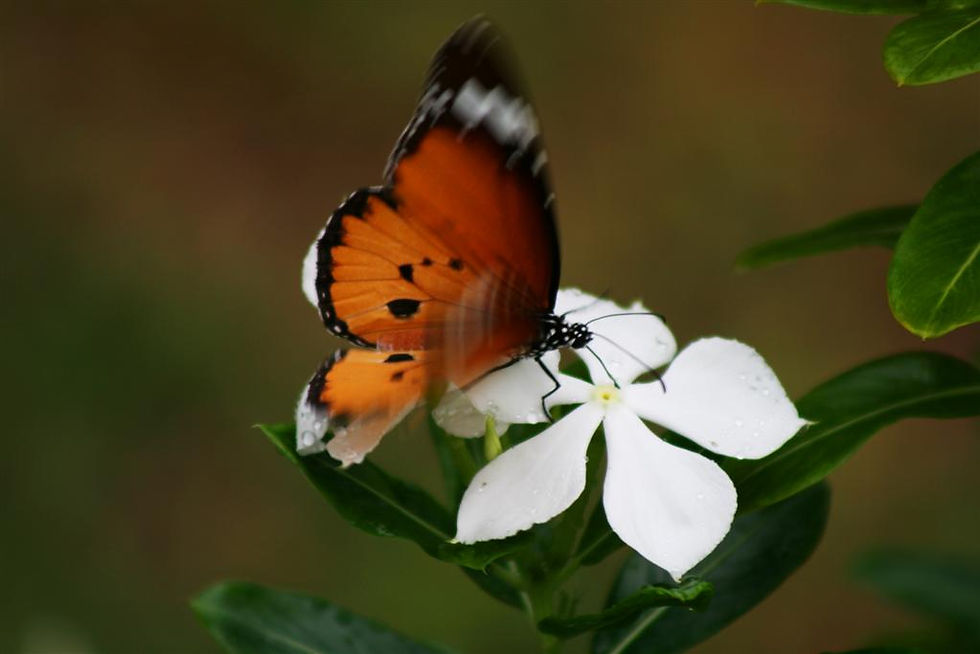
Biomimicry is also revolutionizing functional surfaces thanks to concrete advances. Self-cleaning surfaces , inspired by lotus leaves or mosquito eyes , are already being integrated into textiles and household appliances. Similarly, bio-inspired optical structures, mimicking the wings of morpho butterflies , generate structural colors—that is, colors obtained without chemical pigments—an innovation now adopted in cosmetics and fashion. Finally, anti-reflective surfaces, designed to resemble the eyes of moths , are finding applications in shop windows, screens, and watch crystals, effectively reducing reflections and glare.
Whether it is optimizing structures and materials, rethinking functional surfaces or transforming production and usage methods , biomimicry offers a range of innovations perfectly suited to the challenges of modern consumer goods.