_edited.png)


Across all industries, particularly in the mobility sector, the trend is toward automation and connectivity. Infrastructure, furniture, equipment, appliances, vehicles, aircraft, drones, trains, and subways: systems must be increasingly intelligent, connected, responsive, and reliable.
Depending on the industry and context, they must be able to detect and interpret an environment, understand or anticipate an ongoing phenomenon, or accurately measure physical data, even in the event of a partial failure.
Manufacturers, whatever their sector, are therefore developing all kinds of sensors, including optical and reflective ones.
And in order for the information collected to have value, it obviously needs to be processed and an appropriate and rapid response must be induced from the system and its computing units, particularly for embedded systems in the mobility sector.
Signal processing methods, the algorithms that govern them, memory management, and computing speed are rapidly becoming key technological challenges. These systems and intelligences will also be the subject of intense competition.
How can we increase the multisensory capabilities and reliability of systems and develop new types of sensors? How can we improve detection capabilities? How can we develop fast and energy-efficient artificial intelligence?
Information management was not invented by humans. Nature is far more experienced and can offer many particularly interesting lessons.
Nature orchestrates complex ecosystems. To interact, species must understand their surrounding environment and therefore analyze the information they perceive. Hearing, sight, touch, sensitivity to magnetic fields, chemoreceptors: the intelligence of perceptual methods is virtually infinite.
Processing complex signals, correlating them, and making appropriate decisions is the most common activity in all living species. Every individual is equipped with a nervous system and a brain that allow it to respond to complex, sometimes unprecedented, situations to ensure its daily survival. Information processing is not, moreover, an animal monopoly, as it also occurs in the plant world.
Natural processing principles and systems are highly effective, regardless of the neural capabilities of the species studied. They are both simple and sophisticated, remarkably efficient, and fundamentally economical in their design and consumption.
As specialists in the field, Bionnov explains why and how biomimicry offers innovative solutions and approaches for designing the information detection and processing systems of the future. Here, we present a selection of particularly compelling examples.
The human perspective : optimizing the reaction speed of embedded autonomous systems.
Traditional methods of information processing involve analyzing the perceived image, pixel by pixel. Their responsiveness remains relative.
These techniques can be replaced by an approach inspired by the human "retina-cortex" system. This approach involves not analyzing each image in its entirety, but rather recording changes in certain global characteristics such as hue, speed, or direction. This type of processing allows for the rapid elimination of irrelevant elements such as buildings or trees along the roadside, or an object moving away from the vehicle.
Drawing inspiration from human vision , the French company Prophesee has designed vision systems that give machines a responsiveness close to our own. This technology is based on observing events rather than images.
More energy-efficient and multifunctional, this bio-inspired system finds applications in many sectors : from automotive to health, including robotics and industrial assembly.
Prophesee continues to rack up international awards: the company was nominated for the Silicon 60 Class by the American magazine EE Times for the third consecutive year in 2019, as well as winning the Top Innovation 2019 award from inVISION magazine .


Image credits: © Prophesee
Dragonflies : optimizing trajectory anticipation and obstacle detection.
In the field of mobility, autonomous vehicles, trains, and drones must be able to understand their environment. To achieve this, algorithms must be capable of analyzing the reality of a given situation. Intelligent algorithms must be able to anticipate the trajectories of other objects.
In the case of land mobility: other cars, pedestrians, cyclists, for example. Even though it's a skill mastered by humans, we are far from being the most gifted in this area. Many insects are much more reactive and skillful than we are. They could inspire new methods for developing algorithms.
The dragonfly is a formidable predator: its success rate is estimated at 95% (compared to 50% for the great white shark). It has 360° vision and an exceptional reaction time of 30 milliseconds. It is particularly impressive for its ability to track its prey, especially flies, gnats, and mosquitoes, and to anticipate their movements in order to catch them in mid-air.
This biological model of the dragonfly proves to be less complex to study than that of Man and the still unknown mechanisms of his brain. Researchers from Lund University in Sweden and Adelaide University in Australia have therefore studied the insect to understand its ability to detect movements and anticipate trajectories in order to replicate it within artificial neural networks.
They designed an autonomous robot to test their innovation, which would optimize the analysis of object trajectories in the environment of vehicles. This technology will pave the way for a better response to incidents and risky situations, and the possibility of creating better maneuvers to avoid obstacles or other vehicles.

Image credits: © University of Adelaide
Swarms of locusts : an unparalleled anti-collision system.
In the field of computers and embedded systems, the issue of data overload often arises. How can information be prioritized in a dense data stream? This is particularly relevant in the field of mobility, where it is crucial to develop fast analysis systems capable of detecting collisions.
Prioritizing perceived information is a specialty of nature, which must use the nervous systems of animals to a minimum to ensure low energy consumption.
Here too, biomimicry can provide intelligent solutions!
Let's take a closer look at the grasshopper: this insect has the unique ability to move in swarms. Some grasshopper clouds even reach over 40 million individuals per square kilometer! Despite this incredible density, the risk of collision between individuals is extremely low. Clearly, the grasshopper's ability to avoid its fellow grasshoppers is highly refined and efficient, as the insect must react so quickly using a nervous system that is infinitely simple compared to the human brain.
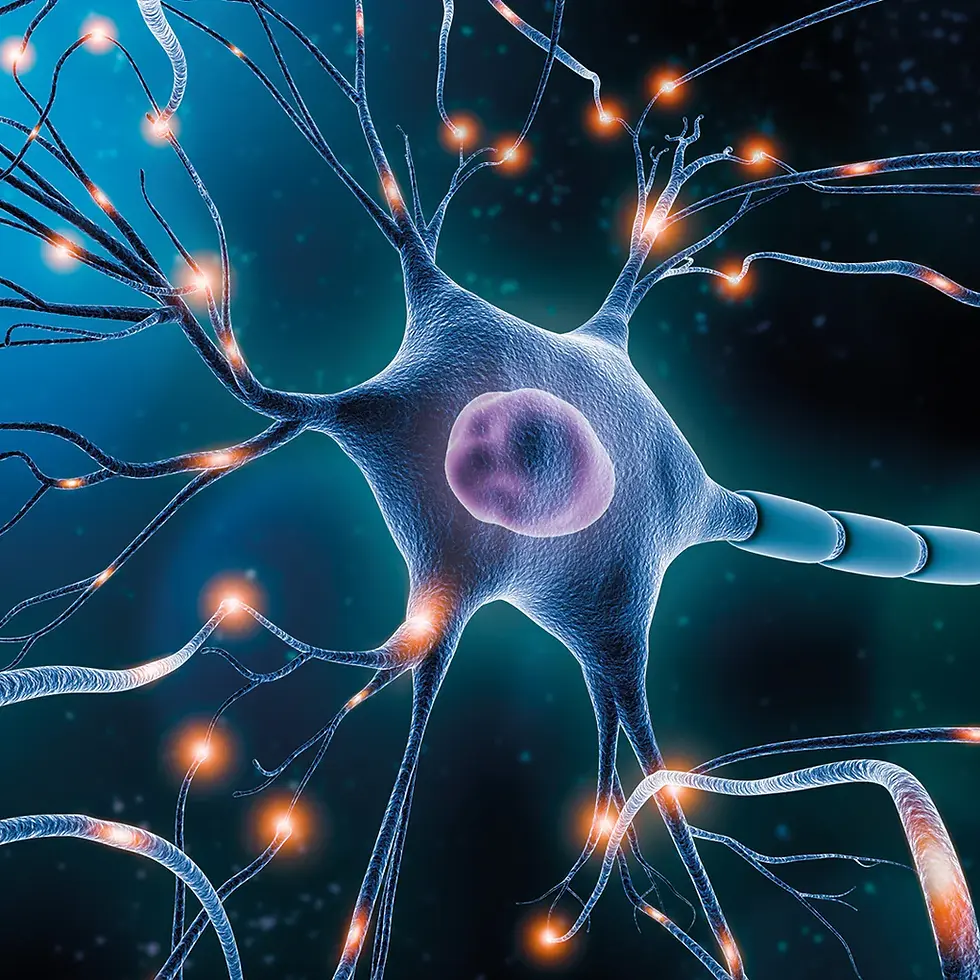
How does it avoid collisions? The grasshopper has a giant neuron in its brain, responsible for piloting the insect. Visual stimuli perceived by the grasshopper generate electrical potentials that travel along the optic nerve to the giant neuron. This neuron acts as a filter: for a grasshopper's vision, objects or other grasshoppers flying on a collision course generate a stronger electrical potential than other grasshoppers flying alongside it.
These strong signals, which induce a higher voltage, manage to pass through the giant neuron to reach the brain. Other signals are filtered out and ignored. Thus, the cricket is only concerned with a small number of elements and obstacles. The others are automatically ignored.
By studying the functioning of this neuron, researchers at the University of Lincoln have developed a fast and energy-efficient sensor for autonomous vehicles. This research is particularly useful for developing algorithms capable of operating in traffic-heavy environments or simply for reducing the load on embedded systems' computers.
Image credits: © Bilal Tarabey / AFP
The elephantfish : ultra-sophisticated detection in disturbed environments thanks to the electric field.
The elephantfish (Gnathonemus petersii) is a nocturnal fish of African rivers. It lives in particularly murky environments, with turbulent and dark waters.
Despite everything, it is perfectly capable of locating its prey and other members of its species. Its detection method relies on an electric field that it produces through muscular contraction. It then perceives the slightest variation in this electric field using its electroreceptors to locate its prey or other members of its species.
Inspired by this electrical sense, the French company Elwave has developed a set of sensors enabling the real-time electromagnetic detection and characterization of all types of objects in 360°.
Already used to guide underwater robots or detect buried objects, this technology can significantly reduce the risk of blind spots and visibility defects for a vehicle in motion.
Image credits: © Elwave
Camelid nictitating membranes : ensuring sensor cleaning
Developing high-performance, sophisticated sensors is of little use if they become clogged and ineffective in adverse weather conditions. Here's an example Bioxegy has worked on in the automotive sector.
Current cleaning systems, which use nozzles similar to windshield washer nozzles, often require a lot of water and very regular maintenance, impossible to carry out on long journeys. Consumption has even been estimated at 100 L/h in snowy conditions!
Faced with this problem with one of its clients, Bioxegy turned to camelidae, camels and dromedaries.
These desert mammals must contend with the aridity of their environment and face particularly intense sandstorms. Despite this, they manage to clean their eyes of impurities and grains of sand.
They owe this unique ability to their nictitating membranes, transparent third eyelids that protect the eyeball and clean it. This "biological system" is particularly effective because it minimizes the need for the tear glands, which are normally used to lubricate the cleaning action.
Inspired by this principle, the Bioxegy teams have been able to imagine a mechatronic cleaning device for the optical sensors of autonomous vehicles, which is economical in water and energy!
Image credits: © Bioxegy
Desert ants : orienting themselves in space using only light rays
Can a vehicle or train whose orientation relies exclusively on a network of satellites be considered truly autonomous?
This is the question that arises for autonomous vehicles guided by GPS. Indeed, this system has certain limitations, aside from the amount of infrastructure required for its operation, such as its resolution varying from 5 to 15 meters or its sensitivity to storms or fog.
The increasing availability of autonomous transportation, particularly in certain parts of the world, could quickly lead to the need for private vehicles to navigate independently without GPS. But what if the answer lay with ants?
Desert ants (Cataglyphis) possess an exceptional ability to orient themselves in space. They are able to find their way back without using phenotypes, the chemical receptors normally used by other ant species.
Their positioning technique relies on a three-pronged strategy: they study the polarization of sunlight, measure distance using optical flow, and count their steps. Researchers from the CNRS and Aix-Marseille University , at the Institute of Movement Sciences - Étienne Jules Mayer (ISM), designed the Antbot robot, directly inspired by these desert ants.
Antbot replicates the navigation strategy of ants and is able to return to within one centimeter of its starting point after a random exploration of 14 meters. It's worth noting that this technology requires very little computing power, resulting in considerable savings in equipment, weight, and energy. This technique could inspire other navigation technologies in numerous fields, particularly mobility, and lead to efficient and cost-effective devices.
Image credits: ©Michael Mangan & Hugh Pastoll ©Julien Dupeyroux, ISM (CNRS/AMU)
Discover other technical areas of interest in biomimicry


Algorithms & Information Processing
Biomimicry, detection and information processing: shaping the embedded systems of the future